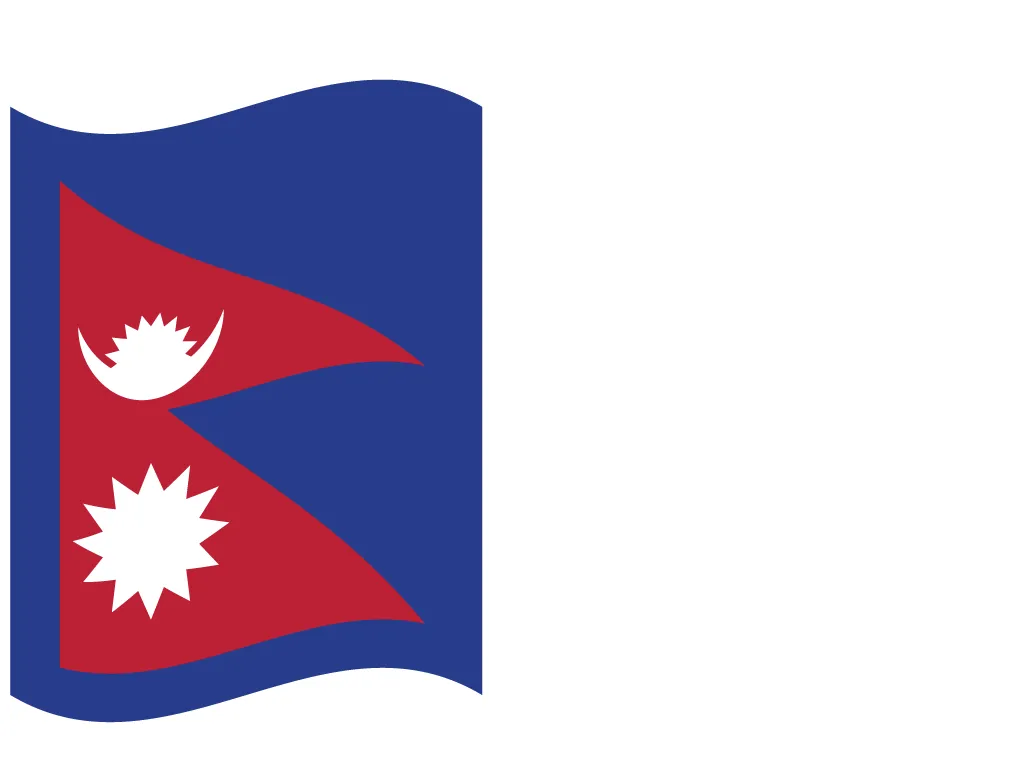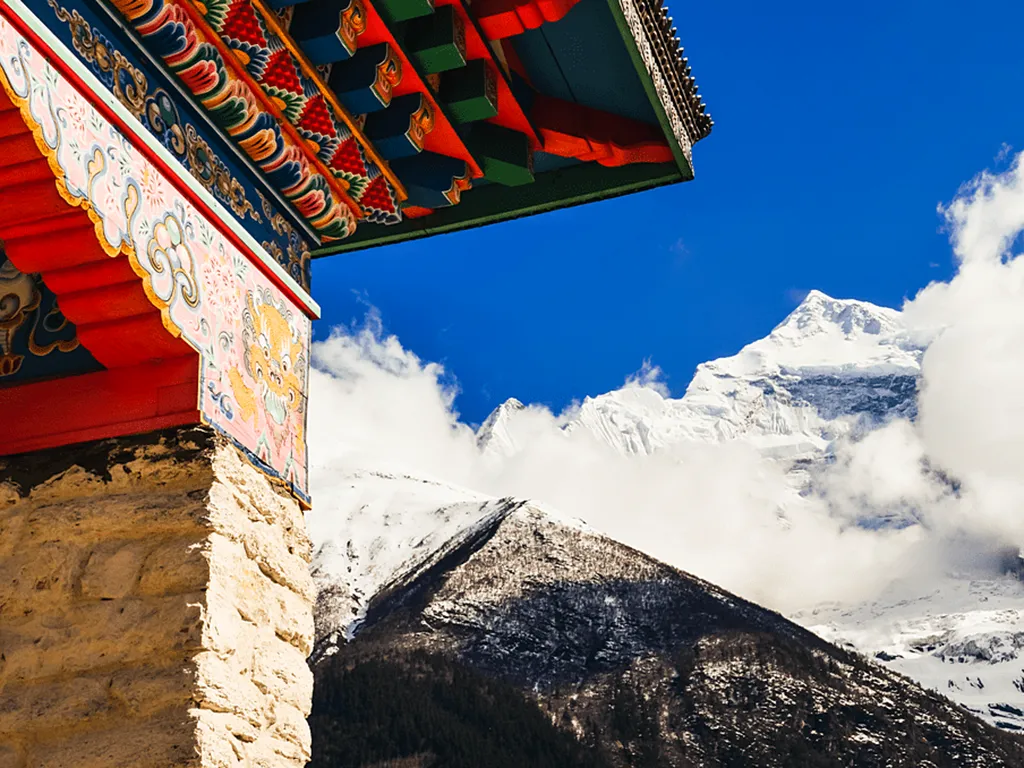
Nepal,officially the Federal Democratic Republic of Nepal, is a landlocked country in South Asia. It is mainly situated in the Himalayas, but also includes parts of the Indo-Gangetic Plain. It borders the Tibet Autonomous Region of China to the north, and India to the south, east, and west, while it is narrowly separated from Bangladesh by the Siliguri Corridor, and from Bhutan by the Indian state of Sikkim.
| Population | 30.03 Million (2021) |
| Border Countries | Nepal borders with India to the east, south and west and the Tibet Autonomous Region (TAR) of the PRC to the north. |
| Capital City | Kathmandu |
| Currency | The Nepalese Rupee |
| Language | Napali (main language), Maithili, Bhojpuri, Tharu, Tamang, and Newari are also official languages of Nepal |
| Religion | Hindu 81.3%, Buddhist 9%, Muslim 3% |
| Type of Government | Federal democratic republic |
| % living in poverty | 15.1% of the population lived below the national poverty line in 2022/23 |
| Life Expectancy | Male: 66.57 years and Female: 70.36 years |
| Infectious Diseases | Dengue fever, scrub typhus, influenza (H5N1 and H1N1) |
| Top Killers | Cardiovascular and chronic respiratory diseases and Neoplasms |
| Literacy | Adult literacy rate (% ages 15 and older) 71.15% (2021) |
| Natural Resources | Mineral, forestry, and water resources |
| Agriculture | Nepalese agriculture is dominated by cereal crops. Rice, maize and wheat constitute more than 80% of cereal production |
| Industry | Tourism, carpets, textiles; small rice, jute, sugar, and oilseed mills; cigarettes, cement and brick production |
| Exports | Soybean oil, palm oil, clothing and apparel, carpets, nutmeg (2021) |